Why Standard AWD on the 2026 Outlander Sport a Real Advantage over the 2026 Kona for Woburn, MA Drivers
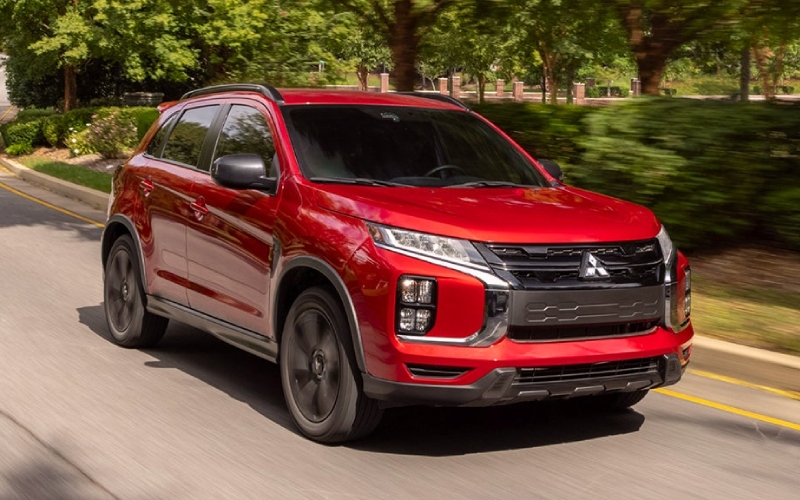
Cornerstone Mitsubishi - Why Standard AWD on the 2026 Outlander Sport a Real Advantage over the 2026 Kona for Woburn, MA Drivers
When comparing small SUVs, one question comes up again and again: does standard all-wheel drive really matter, or is available AWD good enough? It’s a fair question, and the answer rests in how you drive, where you drive, and how often your vehicle encounters changing traction. The 2026 Outlander Sport builds confidence in by making All-Wheel Control (AWC) standard on every trim. The 2026 Kona offers capable HTRAC All Wheel Drive, but only as an available feature. That difference may seem small on paper—until the day the road surface shifts under your tires.
Standard AWC means four-wheel traction is part of the vehicle’s baseline tuning, not an add-on. Power delivery, stability control calibration, and suspension setup are engineered with all-surface grip as the default. On Outlander Sport, you feel this the first time you pull away from a damp side street angled up to a main road: the launch is smooth, the steering stays settled, and the vehicle remains sure-footed as it transitions to a different surface. Kona’s available AWD brings similar benefits once added, of course, but choosing it requires an extra step and sometimes a higher trim. If you want the reassurance all the time—no second guessing or reconfiguring—Outlander Sport removes the what-ifs.
Ground clearance is the next piece of the traction puzzle. Outlander Sport’s 8.5-inch clearance gives front valance and underbody components useful breathing room for crowned urban streets, sloped driveway aprons, and rutted parking pull-offs. Kona’s lower stance is agile and stylish, yet its clearance typically sits lower. That extra half inch or so sounds modest, but you notice it over time when you ease over speed tables, follow a gravel lane to a trailhead, or navigate snow berms at the ends of plowed lots. Clearance complements AWD—both add real-world latitude in where and how you drive.
Tire and suspension choices matter as well. Outlander Sport features a multi-link rear suspension on every trim, which helps the rear tires maintain contact with imperfect surfaces and allows the chassis to absorb bumps without unsettling the cabin. Kona’s rear suspension varies by drivetrain: torsion beam on many FWD models and a multi-link layout on AWD models. That means to get the same rear-suspension sophistication in Kona, you need to select AWD. Again, Outlander Sport makes the balanced setup standard from the start.
How about powertrains? Outlander Sport’s 2.0L MIVEC four-cylinder and CVT are tuned for consistent, predictable torque delivery. That’s helpful when the pavement shifts to pebbled concrete or the lane crown gets pronounced: the drivetrain doesn’t rush, and it doesn’t hunt through gears. Kona answers with two solid options—a 2.0L on most trims and an available 1.6L turbocharged engine with an 8-speed automatic on higher trims. The turbo is punchy, especially for merges, but power is only half the equation when the surface gets slick or uneven. In those moments, the value of default, always-on AWD and a calmer torque curve becomes clear.
Technology and safety round out the conversation. Outlander Sport equips essential Advanced Driver Safety Technology Systems standard, including Forward Collision Mitigation with Pedestrian Detection, Lane Departure Warning, Automatic High Beam, and a Rear Seat Alert—wrapped inside a RISE body structure. The Kona counters with an expansive suite of Hyundai SmartSense features, including standard Forward Collision-Avoidance Assist with Pedestrian, Cyclist, and Junction Turning and Direct Oncoming, Blind-Spot Collision Warning, and more; upper trims add Highway Driving Assist, Surround View Monitor, and Remote Smart Parking Assist. Both SUVs take safety seriously; your decision should reflect which features you want baked into every trim and which you’re comfortable adding via options.
Finally, think about everyday usability. Outlander Sport’s standard LED headlights, available LED fog lights, and standard rain-sensing wipers bring consistent visibility without extra selections. Its cabin keeps physical controls for climate and audio close at hand, and the 8.0-inch SDA with Apple CarPlay and Android Auto is standard. Kona’s dual 12.3-inch screens and available premium extras are impressive, and if you prioritize larger displays or a high-spec audio experience, it delivers on that goal. But if traction, visibility, and a simply effective control layout matter most, Outlander Sport’s standard-equipment strategy makes a persuasive case.
In short, standard AWD isn’t just a spec line. It influences how an SUV is tuned, how it behaves when traction is mixed, and how confidently it clears everyday obstacles. If you’d rather start with a foundation built for all-surface driving and expand from there, the Outlander Sport meets you where you live—no configuration necessary.
- Traction philosophy: Outlander Sport treats all-surface grip as standard; Kona offers AWD as a selectable add-on, strong once equipped but not guaranteed by default.
- Clearance and composure: Extra ground clearance and multi-link rear suspension on every Outlander Sport trim reinforce stable handling over crowned and uneven roads.
- Everyday visibility: Standard LED headlights and rain-sensing wipers on Outlander Sport take the guesswork out of changing conditions.
We recommend test-driving both with the same route and the same maneuvers—steep driveway entry, tight U-turn, and a short section of patched or gravelly pavement. Feel how each SUV launches, steers, and brakes as surfaces change. Pay special attention to steering steadiness on bumpy corners and how smoothly systems put power down. The differences are informative, and you’ll know quickly which tuning speaks your language.
Cornerstone Mitsubishi, serving Woburn, Lowell, and Burlington, can set up back-to-back drives and walk you through how each system manages traction, braking, and steering feel. Our team will align recommendations with how you actually drive—weekday commutes, school drop-offs, weekend getaways—and help you zero in on the build that fits your life. If you prefer capability to be standard, not optional, the Outlander Sport makes your decision easier.
Is all-wheel drive standard on Outlander Sport and Kona?
All-Wheel Control (AWC) is standard on every 2026 Outlander Sport trim. HTRAC All Wheel Drive is available on the 2026 Kona but not standard.
How does ground clearance differ between the two?
Outlander Sport lists 8.5 inches of ground clearance. Kona’s ground clearance is typically lower, which can make a difference on steep driveway aprons, graded lots, and unpaved pull-offs.
Do I need to choose a specific trim to get a multi-link rear suspension?
Outlander Sport includes a multi-link rear suspension on every trim. Kona uses a multi-link rear on its AWD configurations; many FWD configurations use a torsion beam.
Request more 2026 Mitsubishi Outlander Sport information
Welcome Visitor!