Is the 2026 Mitsubishi Outlander's S-AWC better than the 2026 Kia Sorento's AWD for Burlington, MA drivers?
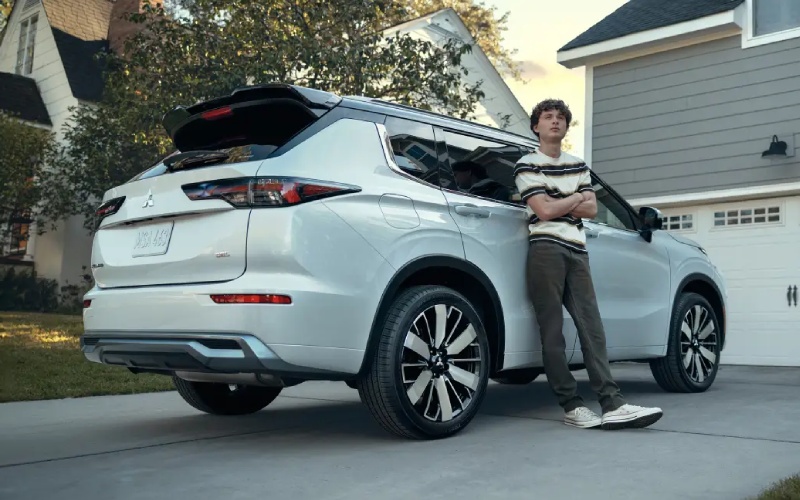
Cornerstone Mitsubishi - Is the 2026 Mitsubishi Outlander's S-AWC better than the 2026 Kia Sorento's AWD for Burlington, MA drivers?
Why this question matters for everyday routes around Burlington
When you compare family-size crossovers with three rows, the conversation often drifts toward styling or screen size. But for Burlington, MA drivers who split time between Route 3, I-95, school loops, and occasional backroad shortcuts, traction technology can define your daily confidence. The 2026 Mitsubishi Outlander pairs a turbocharged 1.5L MIVEC engine with an available Super All-Wheel Control (S-AWC) system, while the 2026 Kia Sorento counters with available AWD and Terrain Mode. Both systems aim to maximize grip and composure, yet they go about it differently-and those differences can be meaningful in your routine.
S-AWC integrates front-rear torque distribution with selective brake control to manage yaw and line-holding in a way that feels natural and smooth. The drive mode menu is tailored for real-world surfaces: Normal and Eco for everyday efficiency, plus Tarmac, Gravel, Snow, and-on S-AWC models-Mud. On a coffee run that mixes parking decks and quick merges, the Tarmac setting dials in crisp response, while Gravel shines on loose shoulders or dusty construction cut-throughs. Sorento's AWD with Terrain Mode is capable and confidence-inspiring, and the brand's tuning works well for many. But Mitsubishi's heritage in traction management shows up in the predictability of S-AWC-especially when you toggle modes to match the surface rather than just the season.
How S-AWC feels different from the driver's seat
The heart of the S-AWC experience is balance. Steering input, throttle, and brake vectoring work together so you can trace the line you expect, even if the pavement throws you a mid-corner patch or a metal plate. That integrated feel can reduce small steering corrections, which lowers fatigue during longer drives. It's not about going faster; it's about needing fewer inputs to get the result you want. The Outlander's steering ratio and suspension calibration complement this control, with tuned MacPherson struts up front and a multi-link rear that filter chatter while preserving on-center stability. On a practical level, that inspires confidence threading into tight driveways or rotating into parallel spots along Cambridge Street.
Sorento's AWD system, particularly when equipped in the X-Pro variant, emphasizes rugged readiness with all-terrain tires and 8.2 inches of ground clearance. It's an appealing package for camping detours or unpaved access roads. Yet for a broad cross-section of Burlington families, the Outlander's S-AWC delivers a more nuanced, set-it-and-forget-it composure-plus Mud and Snow modes that are simple to select when conditions call for it. If you value that feeling of calm control when traffic compresses suddenly or the surface gets inconsistent, you'll appreciate the way S-AWC manages available traction.
Beyond traction: everyday tech and comfort that support confident driving
Confidence is a sum of systems, not a single toggle. Outlander backs up S-AWC with standard wireless Apple CarPlay® and Android Auto™, an available 360° multi-view camera system, and an available kick-motion hands-free power liftgate-details that reduce friction points in your day. The cabin also offers an available Dynamic Sound Yamaha® Ultimate 12-speaker system with DSP tuned by Yamaha® Sound Meisters, plus Speed, Rain, and Air-Conditioner Compensated Volume functions to keep audio levels consistent. Sorento brings compelling tech of its own, like available Dual Panoramic Displays and a 360° Surround View Monitor, but Outlander's thoughtful touches, especially that kick-activated liftgate and Yamaha® audio, often win fans on test drives.
Ownership experience matters, too. Outlander is part of America's Best-Backed Vehicles, with a 10-year/100,000-mile Powertrain Limited Warranty and 5 years of roadside assistance, plus 2 years/30,000 miles of limited maintenance included. That bundled peace of mind helps Burlington families minimize errands and plan service around real life, not the other way around.
Quick takeaways for Burlington drivers
- S-AWC tuning: Integrated torque distribution and brake vectoring target smooth, predictable control you can feel in quick lane changes and tight on-ramps.
- Surface-matched modes: Tarmac, Gravel, Snow, and Mud modes tailor traction to the road under your tires, not just a generic "sport" or "comfort."
- Everyday usability: Available 360° multi-view camera, kick-motion liftgate, and wireless smartphone integration streamline errands and school pickups.
Choosing between these two comes down to what you value most in daily driving. If your goal is the most integrated, easy-to-use control with complementary convenience tech, the Outlander's S-AWC and cabin toolkit feel purpose-built for Burlington routes.
Frequently Asked Questions:
Does S-AWC make a difference if most of my driving is on dry pavement?
Yes. S-AWC's value isn't limited to slick surfaces. Its coordination of torque distribution and brake-based yaw control can smooth out quick transitions, off-camber corners, and uneven patches, helping the vehicle stay composed with fewer driver corrections.
How do the drive modes differ from Sorento's Terrain Mode?
Both systems aim to optimize traction, but S-AWC's Tarmac, Gravel, Snow, and Mud modes are calibrated around surface texture and expected slip, while Terrain Mode focuses on general conditions. Many drivers find S-AWC's modes more intuitive for everyday use.
Will S-AWC impact cabin comfort or noise?
No. S-AWC works in the background. In fact, Outlander's available Dynamic Sound Yamaha® systems-especially with Speed, Rain, and Air-Conditioner Compensated Volume-help keep the cabin relaxed and consistent so you can focus on the road.
Want to feel the difference for yourself? Cornerstone Mitsubishi, serving Woburn, Lowell, and Burlington, can set up a back-to-back drive so you can try S-AWC modes on the same route. Grip is personal; once you feel it, you'll know.