2026 Mitsubishi Eclipse Cross or 2026 Hyundai Tucson — Which AWD system is better for Lowell, MA drivers?
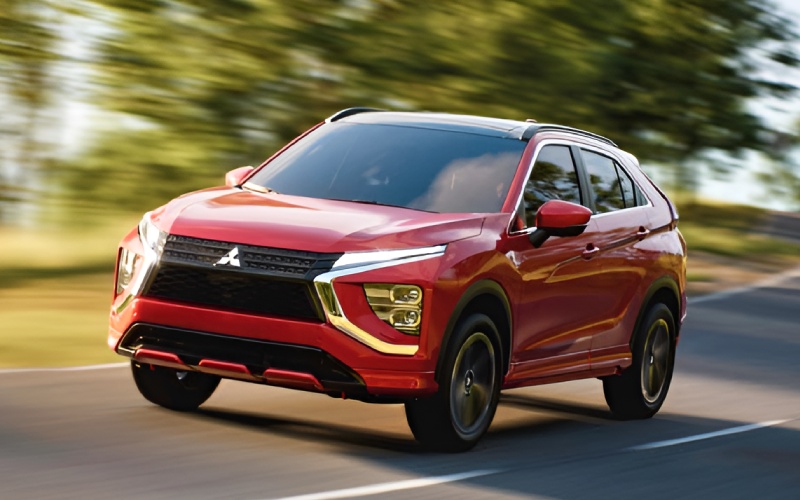
Cornerstone Mitsubishi - 2026 Mitsubishi Eclipse Cross or 2026 Hyundai Tucson — Which AWD system is better for Lowell, MA drivers?
When compact SUV shoppers look beyond styling and screens, one question rises to the top: which all-wheel-drive system gives more confidence in real New England driving? If your daily routine includes a mix of crowded downtown streets, weekend errands, and wintery stretches of I-495, comparing Super-All Wheel Control (S-AWC) in the 2026 Mitsubishi Eclipse Cross with HTRAC AWD in the 2026 Hyundai Tucson is a smart place to start. On paper, both systems enhance traction, but their philosophies differ. Eclipse Cross makes S-AWC standard on every trim, so the traction story starts the moment you sit down. Tucson’s HTRAC AWD is optional, which means you need to be trim-specific or option-focused to get comparable grip.
What does that mean for Lowell, MA commutes? It means Eclipse Cross brings a unified chassis approach—S-AWC, braking, and stability systems working together—every time you pull away from the curb. In slushy intersections, uneven side streets with sand and salt, or fast-laning onto the Lowell Connector, that cohesion helps settle the vehicle and stabilize steering feel. Tucson’s HTRAC AWD is genuinely helpful when equipped, and Hyundai SmartSense brings abundant driver aids, but because AWD isn’t standard, shoppers must be intentional to ensure the traction profile matches their needs year-round.
To help you visualize how this plays out in everyday driving, consider these scenario-based takeaways:
- Snow-dusted start: Eclipse Cross uses S-AWC to meter torque and braking for a clean, slip-resistant launch; Tucson’s HTRAC AWD behaves similarly when equipped, but it’s not on every model.
- Wet rotary merge: Eclipse Cross feels planted mid-arc as S-AWC balances power and steering; Tucson counters with a predictable chassis and traction assist when AWD is present.
- Steep driveway exit: Eclipse Cross pairs Hill Start Assist (HSA) with S-AWC stability; Tucson offers drive modes and traction control that work well, provided your Tucson has AWD.
Beyond AWD specifics, Eclipse Cross adds familiar daily-comfort upgrades that matter when winter hits hard. Available heated steering wheel and heated front seats warm up fast, the handsfree power tailgate helps when your hands are full of groceries or hockey gear, and the Multi-View Camera System on SEL trims makes parallel parking near downtown or at the commuter rail less stressful. Safety features, including Forward Collision Mitigation (FCM) with Pedestrian Detection, Lane Departure Warning (LDW), and available Blind Spot Warning (BSW) with Lane Change Assist (LCA) and Rear Cross Traffic Alert (RCTA), round out confidence on crowded city blocks.
Tucson answers with an impressive set of tech and assists, including Forward Collision-Avoidance Assist, Lane Keeping Assist, and Rear Cross-Traffic Collision-Avoidance Assist on many trims. Its crisp 12.3-inch display and in-vehicle connectivity make it a strong infotainment contender. Still, Eclipse Cross brings Mitsubishi Connect remote features for added convenience and a clean, quiet ride tuned for comfort on cracked pavement and winter-scarred side streets. And because S-AWC is standard, every Eclipse Cross buyer enjoys the traction-first setup that many shoppers end up seeking after the first major storm of the season.
We also hear a related question: does S-AWC help beyond snow? Absolutely. S-AWC shines on rain-slick on-ramps, on dirt or gravel access roads out to trailheads, and on uneven pavement where quick traction adjustments reduce wheel scrabble and steering nibble. It is an always-on confidence booster, not just a snow-day toolkit.
Is S-AWC standard on every 2026 Eclipse Cross?
Yes. Every 2026 Eclipse Cross trim includes Super-All Wheel Control (S-AWC), so you get integrated traction benefits from the start.
Do I need to add HTRAC AWD on Tucson to get similar traction?
Yes. HTRAC AWD is optional on Tucson, so you will need to select it when building or shopping for comparable all-weather capability.
Does S-AWC help on wet roads or only on snow?
S-AWC is designed to enhance stability and grip in a wide range of low-traction situations, including wet pavement, gravel, and light off-pavement use, not just snow.
Which SUV feels easier to park in tight Lowell lots?
Both are manageable, but Eclipse Cross offers an available Multi-View Camera System and a tidy footprint that make parallel and angle parking straightforward.
Are advanced safety features comparable?
Yes. Both SUVs offer robust driver aids. Eclipse Cross features FCM with Pedestrian Detection and available BSW with LCA and RCTA; Tucson offers comparable Hyundai SmartSense features across many trims.
For shoppers building a short list, the most practical takeaway is simple: if you want a compact SUV that bakes in all-weather traction across every trim, Eclipse Cross makes the decision easy. It complements that confidence with available premium touches—heated steering wheel, handsfree power tailgate, paddle shifters—plus app-based convenience through Mitsubishi Connect. With Cornerstone Mitsubishi serving Woburn, Lowell, and Burlington, it is easy to compare trims and feel how S-AWC translates into real-world control on local roads. Try both vehicles back-to-back, and pay attention to low-speed traction, steering calm over rippled pavement, and how the driver aids support your natural driving style. The SUV that feels settled and intuitive in normal traffic is the one that will keep you confident when the weather turns or the commute gets hectic—precisely the areas where Eclipse Cross tends to shine.
If you are narrowing down choices for a daily driver and weekend errand partner, focus on the fundamentals: traction, visibility, and day-to-day usability. In those categories, Eclipse Cross consistently stands out. And while Tucson is feature-rich and polished, the standard traction advantage of S-AWC remains a deciding factor for many New England drivers who live with real seasons and real road conditions.
Ready to test the difference? Visit our team at Cornerstone Mitsubishi to explore trims and features, and to see how S-AWC integrates with Eclipse Cross’s balanced chassis for year-round peace of mind.
Request more 2026 Mitsubishi Eclipse Cross information